

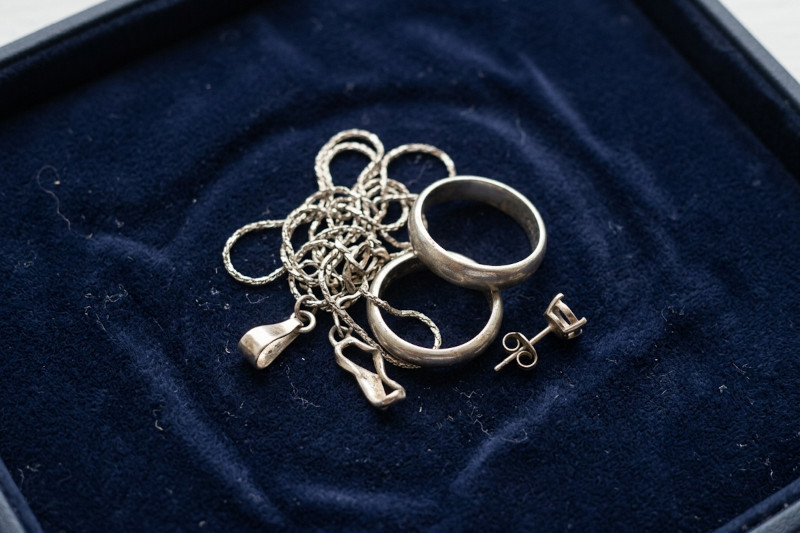
White gold, platinum and palladium can look almost identical in a ring, but each is valued on its own terms when you sell it. What you're paid depends on which metal it is, how pure it is and how much it weighs, not on how white or shiny the piece looks.
If you have an old white metal ring, chain or pair of earrings you no longer wear, it helps to know how a buyer works out its value before you walk in.
The basic sum behind every offer
Precious metal is bought by weight and purity. On our cash for gold page we explain that we pay per gram, based on the weight of the piece and the purity of the metal.
Purity is measured in parts per thousand, which is what the fineness mark on an Irish hallmark shows. So the first step is always the same: weigh the piece, establish its fineness, and work out how much pure metal it contains. A 10 gram ring in 18 carat gold, marked 750, contains 7.5 grams of fine gold. A 10 gram ring in platinum marked 950 contains 9.5 grams of platinum.
That pure metal content is then valued against the market price of that particular metal. Gold, platinum and palladium each have their own price. A white gold ring and a platinum ring of the same weight can be worth very different amounts on the same day, even though they look alike.
White gold: you're selling the gold, not the shine
White gold is still gold. The GIA describes it as gold alloyed with other metals, such as nickel or palladium, copper and zinc, to make it whiter. Most white gold jewellery is then plated with rhodium to give it a bright white finish.
That plating is a surface layer. The GIA notes that it wears away gradually, which is why white gold rings need replating from time to time and why an old white gold ring can look slightly yellow. We explain the reasons in why white gold turns yellow. When you sell, though, the buyer is assessing the gold content of the alloy, so a worn or yellowing finish isn't a problem.
The number that matters most with white gold is its carat. Irish law sets the standards: 9 carat is 375 parts of fine gold per thousand, and the other gold standards recognised by the Assay Office of Ireland include 585 and 750. A 9 carat ring contains half the fine gold of an 18 carat ring of the same weight, so knowing which you have makes a big difference.
You can't judge this by eye. The GIA points out that because white gold is usually rhodium plated, 14 carat and 18 carat white gold can be hard to tell apart visually. The quality or fineness mark stamped inside the piece tells you, and a buyer will test the metal to confirm it.
Platinum: high purity and heavy
Platinum jewellery is usually far purer than gold jewellery. The GIA notes that platinum alloys are typically 90 to 95 percent pure, compared with 58.5 percent for 14 carat gold and 75 percent for 18 carat. The Irish platinum standards are 600, 850, 900, 950 and 999 parts per thousand. The GIA also notes that platinum jewellery is typically stamped with Pt or Plat followed by the fineness, for example Pt950, meaning 950 parts of platinum per thousand.
It's also dense. According to the Royal Society of Chemistry, pure platinum has a density of 21.5 grams per cubic centimetre, against 19.3 for pure gold. Jewellery alloys differ from the pure metals, but in practice the same ring tends to weigh more in platinum than in gold, and weight is what you're paid on.
The GIA describes platinum as denser and stronger than gold and far rarer. None of that sets a price on its own, though. A platinum piece is valued like any other precious metal: its weight, its fineness and the platinum price on the day.
Palladium: check which standard it is
Palladium is the one that catches people out. It belongs to the platinum group of metals, and the GIA describes it as strong and light, hypoallergenic and resistant to tarnish.
Its lightness matters when you sell. The Royal Society of Chemistry gives pure palladium a density of 12.0 grams per cubic centimetre, much lower than platinum or gold, so a palladium ring weighs noticeably less than the same ring in platinum.
Purity varies a lot too. Irish palladium is hallmarked at 500, 950 or 999 parts per thousand, standards brought in by the Hallmarking (Amendment) Act 2019 from 1 October 2019. A piece marked 500 is half palladium. A piece marked 950 is nearly all palladium. Two rings that look the same can contain very different amounts of the metal, so the fineness mark matters a great deal with palladium. The GIA notes that palladium is abbreviated Pd in its quality mark.
Reading the hallmark before you sell
Hallmarking in Ireland is compulsory. Every article of gold, silver, platinum and palladium has to be assayed and hallmarked, with no exemptions by weight, under the Hallmarking Act 1981 as amended in 2019.
A full Irish hallmark has three compulsory marks: the sponsor's mark, showing who was responsible for the piece; Hibernia, the mark of the Dublin Assay Office; and the fineness mark, giving the metal content in parts per thousand. Our guide to reading gold hallmarks shows what to look for.
A hallmark is a good starting point, but it isn't the end of the check. Marks can be worn, and pieces made abroad may carry different stamps. That's why a buyer tests the metal as well. Our article on how XRF machines spot fake jewellery explains one way it's done.
Why they all look similar
Platinum and palladium are white metals in their own right, while white gold is made white with alloy metals and usually a rhodium finish. On a hand or in a drawer, the three can be hard to separate, which is why guessing from appearance is unreliable. If you're curious how they compare as metals to wear, rather than to sell, read palladium versus platinum versus white gold.
The practical upshot is simple. Don't assume a white metal piece is platinum because it feels heavy, or that it's cheap white gold because the finish has worn. Let it be weighed and tested.
Selling to us
We buy gold, palladium, platinum, white gold and rose gold, in any amount and any condition. Your pieces are weighed in front of you, tested and verified, and we make you an offer. If you accept, you're paid in cash on the spot.
You'll need to be 18 or over and bring photo ID, such as a driver's licence, passport or age card. Large amounts are by appointment, so contact us first if you have a lot to sell. If you're wondering what happens to metal once it's sold, we've written about the journey your gold takes.
Call into our shop at 5 Mary Street in Dublin city centre with the pieces you're thinking of selling.