

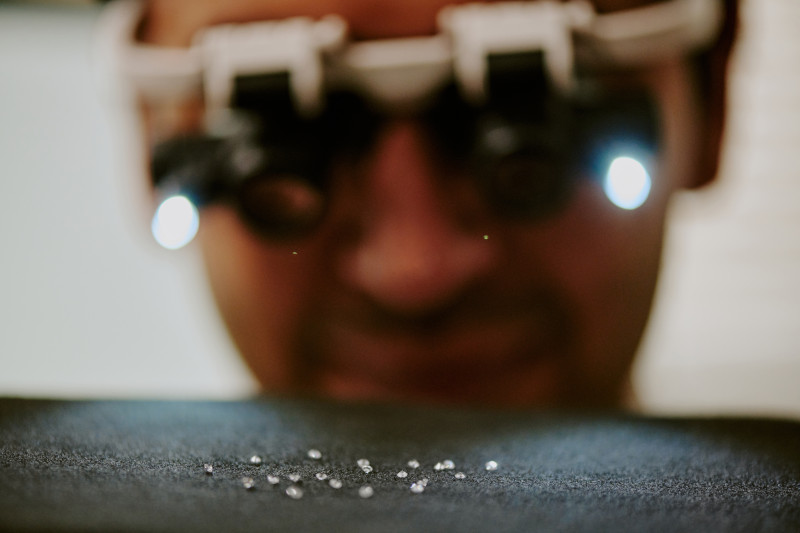
Lab grown diamonds may feel like a modern innovation, but the science behind them is both fascinating and surprisingly straightforward. For many buyers in Dublin, understanding how these diamonds are created adds confidence and reassurance, especially when choosing something as meaningful as an engagement ring or a special piece of jewellery.
This guide takes you behind the scenes to explain how lab grown diamonds are made, what happens at each stage of the process, and why the end result is a genuine diamond with the same beauty and durability as one formed in the earth.
The Starting Point: A Diamond Seed
Every lab grown diamond begins with a tiny piece of diamond known as a seed. This seed is usually a thin slice of natural or lab grown diamond and acts as the foundation for growth.
The seed already has the crystal structure of a diamond, which allows carbon atoms to attach to it in the correct arrangement. From this small beginning, a full-sized diamond can grow over time.
Recreating Nature in a Controlled Environment
Natural diamonds form deep underground under extreme heat and pressure. Lab grown diamonds are created by recreating these conditions in a controlled setting, allowing scientists to guide the process with precision.
There are two main methods used to grow diamonds in laboratories today.
High Pressure High Temperature Method
This method closely mirrors how diamonds form naturally.
The diamond seed is placed in a press that applies intense pressure and heat. Carbon is introduced, and under these conditions, the carbon atoms begin to bond to the seed. Over time, layer by layer, the diamond grows.
This process can take several weeks, depending on the size and quality of diamond being produced. The result is a diamond with the same internal structure as a natural one.
Chemical Vapour Deposition Method
Chemical Vapour Deposition, often referred to as CVD, is a more modern technique.
In this process, the diamond seed is placed inside a sealed chamber filled with carbon rich gas. When the gas is heated, the carbon breaks down and settles onto the seed. The diamond grows gradually as carbon atoms attach themselves in a precise pattern.
This method allows for a high level of control over the diamond’s growth, often resulting in stones with excellent clarity and consistency.
Growth Takes Time
Although lab grown diamonds are created faster than natural diamonds, they are not produced overnight. Growing a high-quality diamond takes time, careful monitoring and advanced technology.
The growth process can take weeks or even months, depending on the desired size and characteristics of the diamond. Once growth is complete, the rough diamond is removed and prepared for cutting.
Cutting and Polishing
After the diamond has finished growing, it is cut and polished in the same way as a natural diamond. Skilled craftspeople shape the stone to maximise its brilliance and sparkle.
This stage is crucial. A well-cut diamond reflects light beautifully, while a poorly cut one can appear dull, regardless of whether it is lab grown or natural.
The cutting and polishing process transforms the rough diamond into a finished gemstone ready to be set into jewellery.
Grading and Certification
Once cut, lab grown diamonds are graded by independent gemmological laboratories. They are assessed using the same criteria as natural diamonds, known as the four Cs: cut, colour, clarity and carat weight.
A grading certificate provides full transparency and confirms the quality of the diamond. It also clearly states that the diamond is lab grown, ensuring buyers know exactly what they are purchasing.
Are Lab-Grown Diamonds Treated Differently in Jewellery?
No. Lab grown diamonds are set, worn and cared for in exactly the same way as natural diamonds. They are just as hard and durable, making them suitable for everyday jewellery such as engagement rings.
They can be resized, cleaned and maintained over time without any special requirements.
Why Understanding the Process Matters
For many buyers in Dublin, knowing how lab grown diamonds are made removes uncertainty. It helps people understand that these diamonds are not imitations or substitutes, but genuine diamonds created using modern technology.
This knowledge allows buyers to focus on design, craftsmanship and personal meaning rather than worrying about authenticity.
Final Thoughts
Lab grown diamonds are the result of advanced science combined with traditional craftsmanship. By recreating the conditions found deep within the earth, laboratories can produce real diamonds with exceptional beauty and consistency.
Understanding how these diamonds are made offers reassurance and clarity, helping buyers make confident choices that suit their values and lifestyle.